2025 in Review at TTC's Digital Accessibility Practice
As we wrap up 2025, it is a chance to step back and take stock of everything our Digital Accessibility Practice has achieved this year together with our incredible clients.
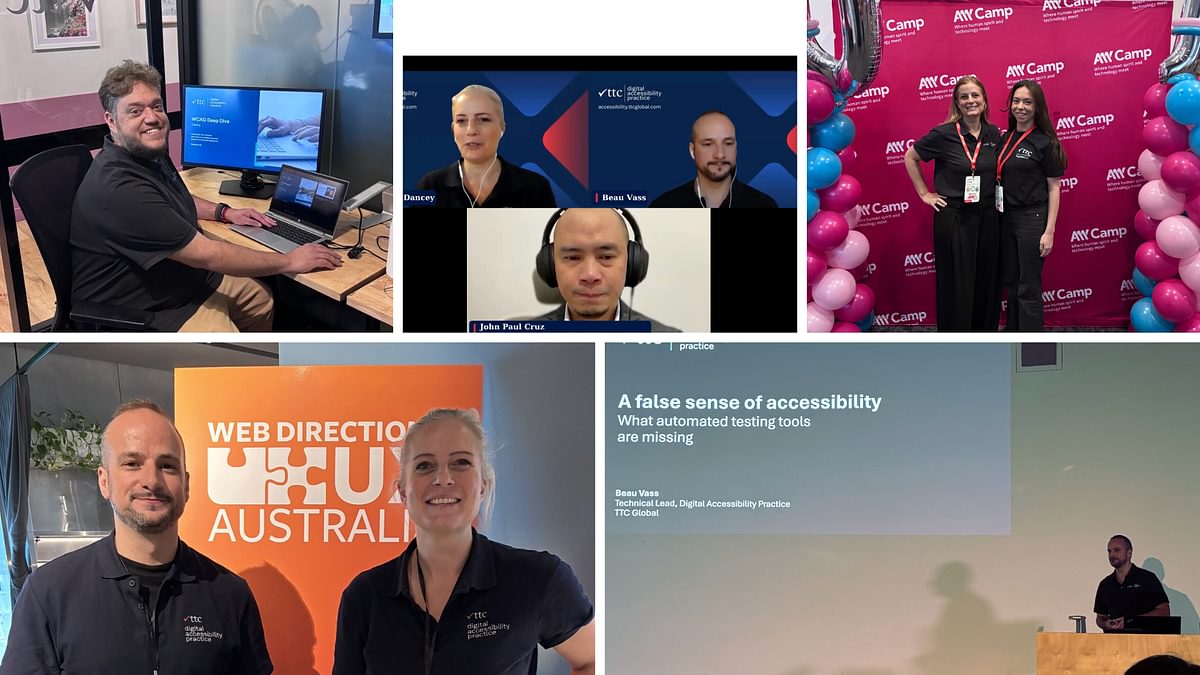
As we share a short look back at 2025, we want to thank everyone who has worked with us. From our incredible clients, passionate about improving digital accessibility, to all those who attended our training, coaching and talks through the year! It has been a steady year of connection across the accessibility community.
Over 2025, in collaboration with our clients and partners, we've achieved so much. Here are some of the highlights:
- Facilitated a range of public training sessions, webinars and free events, raising awareness about digital accessibility and building practical skills to help people embed accessibility in their work.
- Welcomed over 500 people to our live events from across Australia and around the world keen to learn more about accessibility.
- Partnered with our wonderful clients (all at different levels of accessibility maturity) by undertaking consulting, audits and working together to improve the accessibility of digital products and services.
- Recieved feedback from our training participants that their knowledge and awareness of WCAG and digital accessibility increased significantly.
We're also proud of our partnerships and connections we've made and strengthened in 2025; including our pro-bono partnerships with not-for-profit organisations as well as the Valuable 500 and our continued inclusion on the Valuable 500 Directory.
January: Starting with a a Global Focus
We opened the year by drawing attention to one of the bigger game-changers in accessibility, the European Accessibility Act. While many conversations were centred on AI, we explored how this legislative change could signifitantly improve digital accessibility around Europe and the world.
March: Marking World Down Syndrome Day
In March we acknowledged World Down Syndrome Day and shared a new article about how digital accessibility can support people with Down syndrome in practical ways.
April: Updated Guidelines and a New Colleague
April brought a major update from the Australian Human Rights Commission. Their revised Guidelines on Equal Access to Digital Goods and Services expanded how accessibility is defined and applied, and we published a clear breakdown of the key changes.
We also welcomed a new Senior Accessibility Consultant, Karla Patrick. Karla quickly embedded herself in our work, and our short interview with her offered useful insight into her perspective on accessibility.
May: Client Storytelling and GAAD
We highlighted Bendigo Bank’s ongoing access and inclusion work by sharing their approach and areas of focus in a case study on accessible banking we published on our website.
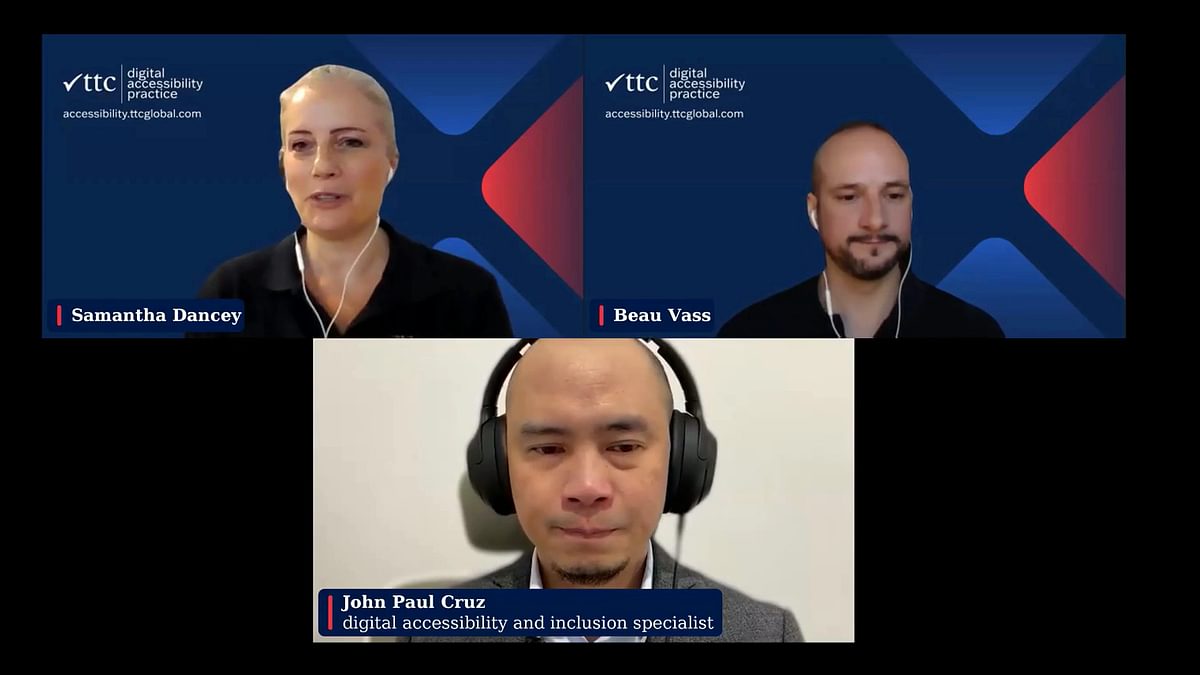
Later in the month, for Global Accessibility Awareness Day, Technical Lead Beau Vass joined disability policy specialist John Paul Cruz for a conversation on progressing accessibility beyond automated tools. You can catch the replay online.
July: Neurodivergent Insight and Everyday Communication
For Disability Pride Month we shared an article by neurodivergent coach Samantha Nuttall about ADHD and digital accessibility.
We also published a piece on email accessibility, prompted by research earlier in the year showing that most emails still fail basic checks. We also ran another session of our Digital Accessibility 101 training.
August: Neurodivergence in the Workplace
With predictions that almost half the global workforce may identify as neurodivergent by 2040, we explored how accessibility supports neurodiverse employees and why WCAG guidance remains essential for building workplaces that work for everyone.
September: Conferences and Delivering Training
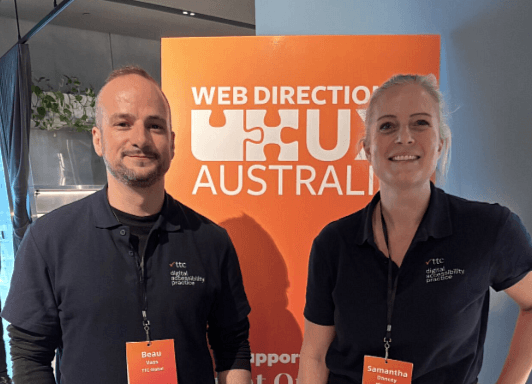
We spent time with the UX community at the UX Australia Conference where presentations highlighted a familiar theme, accessibility needs to be part of design rather than an afterthought.
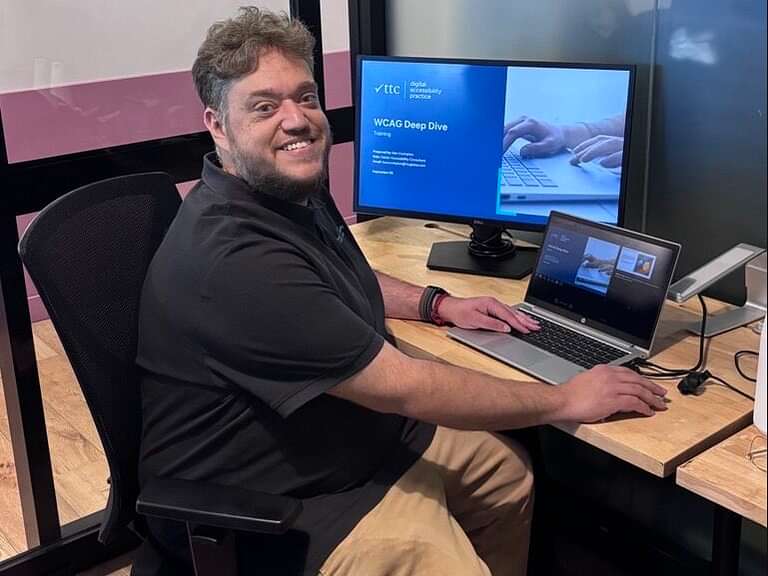
We also delivered another round of our WCAG Deep Dive training, presenting three 2 hour sessions focused on WCAG 2.2.
October: Recognition, Recruitment and Document Skills
Two of our clients, Bendigo Bank and NSW Department of Communities and Justice, were named finalists in the Australian Access Awards. It was great to see their work recognised at a national level.
Our Practice Lead, Samantha Dancey, also partnered with SEEK for a webinar on accessible recruitment and what it means to look at culture add through an accessibility lens.
We continued our public training, delivering our Microsoft Accessibility Fundamentals workshop, exploring practical accessibility how-tos across Word, PowerPoint and Outlook.
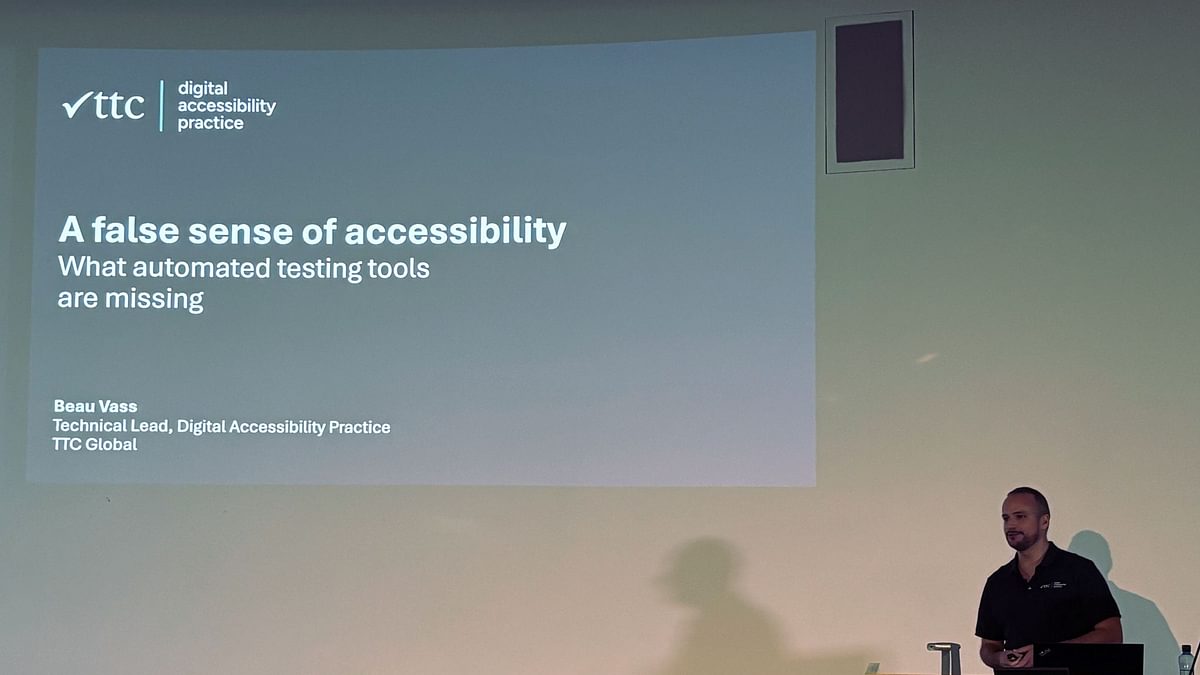
Technical Lead Beau Vass presented at the Inclusive Design 24 conference presenting on the issues around automated accessibility testing to a global audience from across the world.
November: Sharing Knowledge Across the Industry
Technical Lead Beau Vass presented at the Web Directions Developer Summit, speaking about accessibility testing tools and the role developers play in shaping accessible experiences.
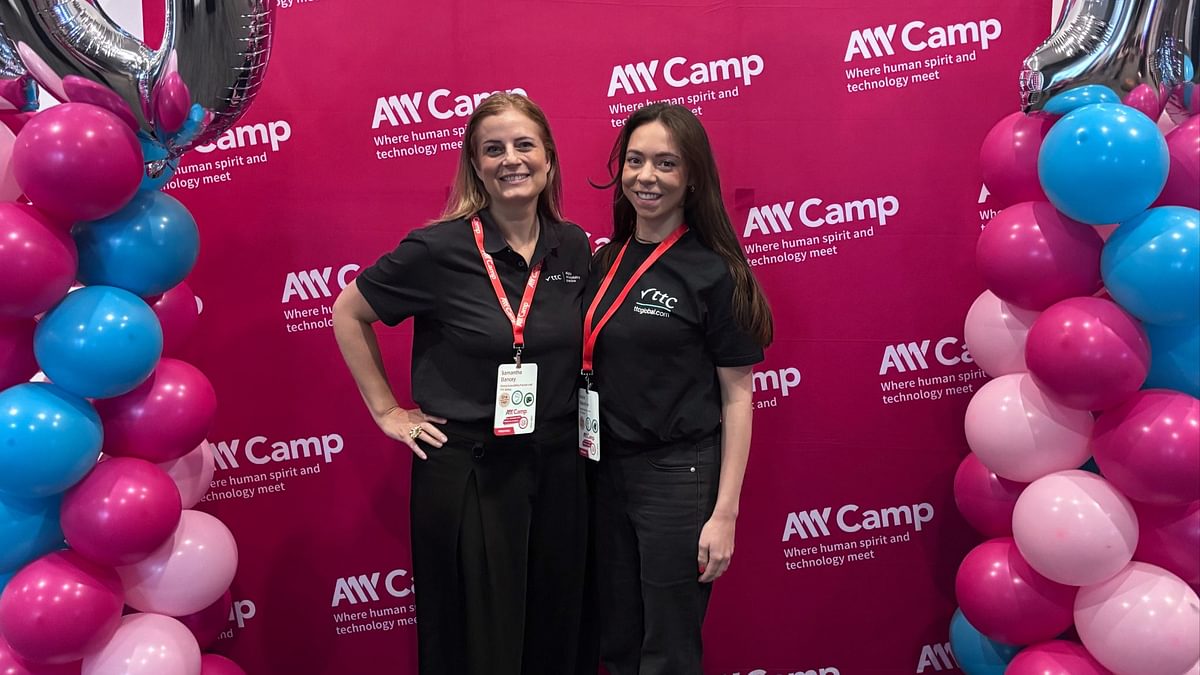
We also attended A11y Camp, connecting with peers across the accessibility and inclusion community. Samantha Dancey’s reflections captured the energy and ideas shared at the event.
December: Closing the Year with Lived Experience
To recognise International Day of People with Disability we ran a free webinar, Seeing Digital Differently, demonstrating how screen readers interpret content. The session offered an a practical look at how design choices affect real accessibility outcomes. It also was a preview of our upcoming Introduction to Using Screen Readers training which we're running in February.
Looking Ahead
As we head into 2026, a core focus for our team is continuing to build practical accessibility capability across organisations. Our public training program will expand again next year, offering courses on accessibility fundamentals, screen readers, mobile apps, WCAG 2.2, document accessibility and more. Each course is designed to give people clear, hands on skills they can apply in their day to day work.