Inclusive Usability Testing
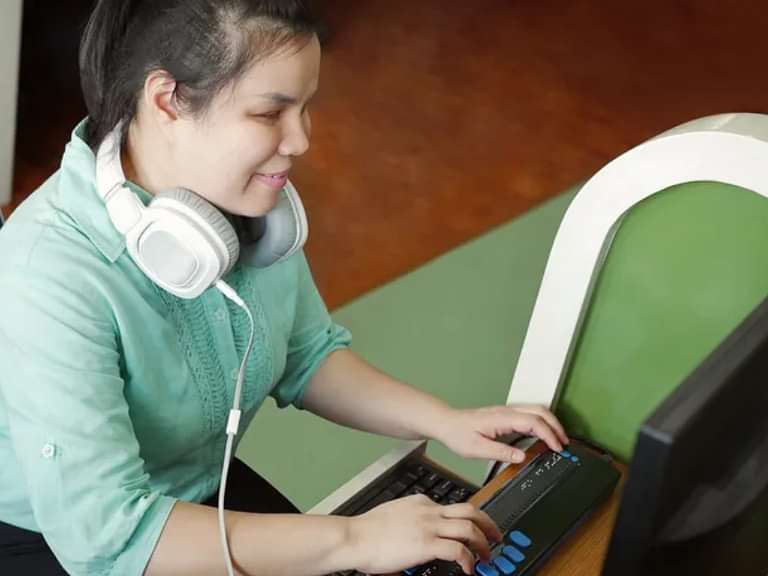
Join Our Accessibility Research Community
We’re building a community of people with lived experience of disability and other barriers when using services, both online and in physical spaces. This includes people from marginalised or underrepresented communities whose needs are often not fully considered in design.
Find out more about joining our accessibility research community.
About Our Usability Practice
Your users include people with disability and other marginalised groups. Your research should too.
One in five Australians has a disability. Many more people are excluded from research due to language, culture, income, geography, age, or digital access. Yet most digital products are still designed and tested without these voices in the room.
We help organisations close that gap by combining a trusted panel of participants, more than 15 years of experience running inclusive research, and flexible ways of working that build your team’s capability over time.
What we do
End-to-end usability testing
We plan, recruit, and run usability testing with people with disability and other marginalised groups, from first brief through to final report.
You get clear, real-world insight into how your product performs across a broader range of users, along with practical recommendations your team can act on straight away. We distinguish between usability issues and accessibility barriers, so you know exactly what to fix and why.
Participant recruitment
Access to the right participants is critical and often the hardest part to get right.
We maintain a panel of people with disability and have established pathways to recruit from a wider range of marginalised communities. You are not relying on a token sample. You get participants who reflect the diversity of your users and the realities of how your product is used.
Capability building and mentoring
We do not just deliver research. We help you build the capability to do it yourself.
Through training, mentoring, and hybrid delivery models, we partner with your team as they plan, run, and analyse research with a broader range of participants. Over time, inclusive research becomes part of how your team works, not something you outsource.
Flexible ways to work together
- Full-service research: we handle everything from recruitment through to reporting
- Recruitment only: you run the research, we find the right participants
- Hybrid and mentoring: we work alongside your team to build internal capability
Why It Matters
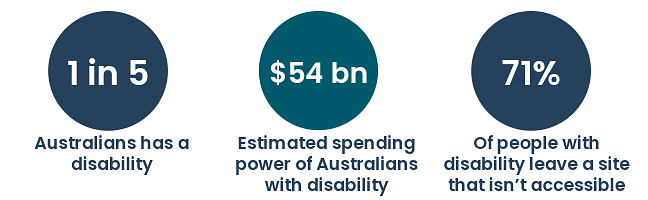
1 in 5 Australians has a disability and have an estimated spending power of $54B. In addition, 71% of people with disability leave a site that isn’t accessible
- It is the right thing to do:
Inclusive design starts by including people who are often left out of research. - It is good for business:
Products that work for a broader range of people reach more users, reduce risk, and build trust with communities that are often overlooked. - It leads to better products:
Research with people at the edges surfaces issues that improve the experience for everyone. - Your team can learn to do this:
With the right support, inclusive research becomes standard practice, not a specialist skill.
Meet Charlii Parker, Usability Practice Lead

Charlii is a Senior Usability and Accessibility Consultant specialising in creating inclusive, user-friendly digital experiences.
With deep expertise in accessibility standards, assistive technologies, and lived experience research, Charlii helps teams move beyond compliance to deliver products that work seamlessly for all users. Known for clear communication and practical recommendations, Charlii brings a strong human-centred approach to every project.
Let's Chat
Whether you need a single round of testing or want to build long-term capability, we’ll work with you to shape something that fits.
Contact our Senior Usability and Accessibility Consultant Charlii Parker at [email protected] or fill our contact form.